At StoryPoint Group senior living communities, there’s always something to celebrate. Whether we’re commemorating a milestone, ushering in a new season, or celebrating a birthday, residents have meaningful moments to look forward to throughout the year.
Día de los Muertos is one of those special celebrations for many seniors, bringing together loved ones to remember deceased loved ones, and celebrate their lives and cultural heritage. For StoryPoint Group, the unique experiences and backgrounds each resident brings are a part of what makes life in our communities special every day of the year.
What is Día de los Muertos?
Día de los Muertos, also known as Día de Muertos or Day of the Dead, is a holiday celebrated across Mexico, parts of Central America, and by many Mexican Americans in the United States. In this holiday, grief and joy come together to honor and celebrate the lives of those loved and lost.
Typically observed on November 1 and 2, Día de los Muertos has roots in both Indigenous customs and Spanish Catholic traditions.
The Indigenous origins of Día de los Muertos can more specifically be traced to the Aztecs, Toltecs, Olmecs, and Maya. These civilizations understood a cycle of life and death, where death represented a transition to another realm instead of an end. It was believed that the spirits of the dead could sometimes return to the earthly world.
In Aztec tradition, a person’s soul was believed to travel to Chicunamictlán (the Land of the Dead) on a difficult journey. Only after completing this journey over several years could a person’s soul reach the final resting place, Mictlán. In summertime rituals to honor the dead, family members would present offerings such as food, water, and tools to aid loved ones on their journey.
When Spanish colonizers conquered the Aztec empire in the 16th century, the Catholic Church moved Indigenous practices honoring the dead to correspond with the Catholic holidays of All Saints’ Day and All Souls’ Day on November 1 and 2. The November 2 celebration became what we now know as Día de los Muertos, honoring the dead with a fusion of Indigenous and Catholic practices and beliefs on the afterlife. Becoming known as Día de los Inocentes (Day of the Innocents), November 1 similarly became a celebration to honor angelitos (deceased children).
Today, many of the modern practices of Día de los Muertos are thanks to El Movimiento, or the Chicano Movement. Chicano artists and activists in the 1970s were intentional with utilizing the holiday to build identity amongst Mexican Americans. El Movimiento also purposefully sought to incorporate more indigenous traditions and themes of Día de los Muertos back into the holiday — infusing imagery of skulls, skeletons, and offerings into more popular practice.
How is Día de los Muertos Celebrated?
Modern celebrations of Día de los Muertos can vary across Mexico and the other celebrating communities. At every celebration’s core, however, is the honoring and celebration of lost loved ones.
In Mexico, a very popular observance is to visit cemeteries to clean and decorate the graves of loved ones. Some of the things that can be seen decorating graves include candles, cempasúchiles (marigolds), and favorite foods and drinks of the deceased. These are laid out to encourage the spirits of loved ones to return for a joyful reunion.
Similar to the decorating of graves, one hallmark of Día de los Muertos is the construction and decorating of ofrendas (offerings), which are a type of altar. Ofrendas are sometimes arranged in homes, or beside the graves of deceased loved ones — though they can also be set up in public, sometimes ornate displays. Around these sites, loved ones gather to share stories, eat together, and care for the resting place of their departed family and ancestors.
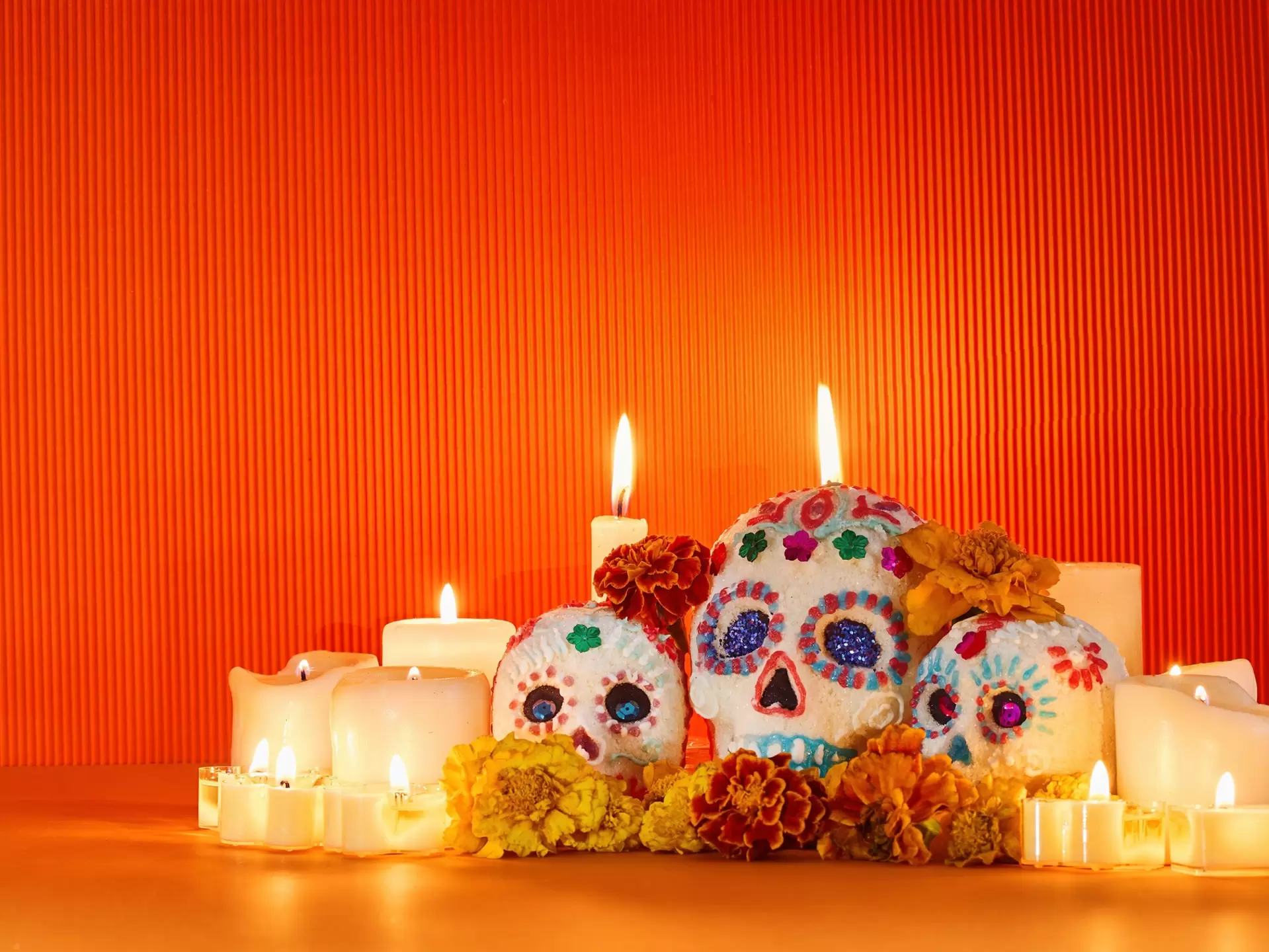
Ofrendas usually incorporate representations of the four elements of nature — fire, water, earth, and wind. Candles represent fire and light a spirit’s journey. Water is offered for purification. Food, like pan de muerto (bread of the dead), is laid out to nourish spirits and represent earth. Finally, the hanging of colorful folk art called papel picado (punched paper) embodies the element of wind. Though there are many traditional elements of ofrendas, variations are often made based on who the ofrenda is dedicated to, and what they loved in life.
Other ways folks celebrate can include the decoration of sugar skulls, dressing in costume as figures like La Catrina (an elegant skeleton woman), and attending parades and music festivals.

Día de los Muertos Activities for Seniors
Día de los Muertos celebrations around the world are a time for remembrance and vibrant celebration. Whether the time is spent honoring personal traditions or learning more about the holiday, Día de los Muertos has many ways to celebrate.
For seniors celebrating Día de los Muertos, they may enjoy:
- Visiting the graves of deceased family and friends
- Creating and decorating ofrendas with loved ones
- Sharing favorite stories, photos, and moments of the deceased
- Attending local parades and music festivals
- Writing calaveritas literarias, satirical poems poking at death
- Participating in a themed craft, like making sugar skull masks from paper plates
For seniors who don’t celebrate Día de los Muertos, there are still some ways to be a kind neighbor. Some include:
- Learning more about the history and celebration of Día de los Muertos
- Acknowledging that your neighbors may be busy with plans to spend time with loved ones
- Asking your neighbors celebrating about their traditions, if they’d like to share
Celebrate Every Day at StoryPoint Group
At StoryPoint Group, we celebrate the people who make our communities special every day. From holiday traditions to everyday activities and community events, life at StoryPoint Group is filled with ways to connect, engage, and shine every day.
Whether you’re looking for active adult living, independent living, enhanced living, assisted living, or memory care, you’ll find welcoming communities where every day brings something to celebrate.
To learn more about what makes life at StoryPoint Group so special, schedule a tour at a community near you, or call us at 1-844-275-9990.