At StoryPoint Group senior living communities, we love to celebrate. Whether we’re celebrating a birthday, commemorating a milestone, or welcoming a new season, there’s always a meaningful moment for residents to look forward to no matter the time of year.
For many seniors, Diwali is one of those special celebrations. Around the world, Diwali brings over a billion people together to celebrate the triumph of light over darkness. For StoryPoint Group, it’s the unique backgrounds and experiences of each resident that’s a part of what makes celebrating holidays in our communities so special.
What Is Diwali?
Diwali is a holiday celebrated throughout India and the Indian diaspora around the world. A major religious festival for Hindus, Diwali is also celebrated with distinct traditions by Sikhs, Jains, and some Buddhists.
Diwali is a five-day celebration centering around the new moon (or Amavasya) on the Hindu lunisolar calendar. Because of this, where the festival falls on the Gregorian calendar can vary — taking place between mid-October and mid-November.
Also known as Deepavali, the name of the holiday translates to “row of lights.” Traditions and focuses surrounding the holiday vary depending on region and religion. Across variations, Diwali celebrates the triumph of light over darkness, and good over evil.
How Is Diwali Celebrated?
Aspects of Hindu Diwali celebrations vary across regions of India. Depending on the region, which gods and goddesses being celebrated can vary, along with traditions. Across all celebrations though, celebrating light is a common theme.
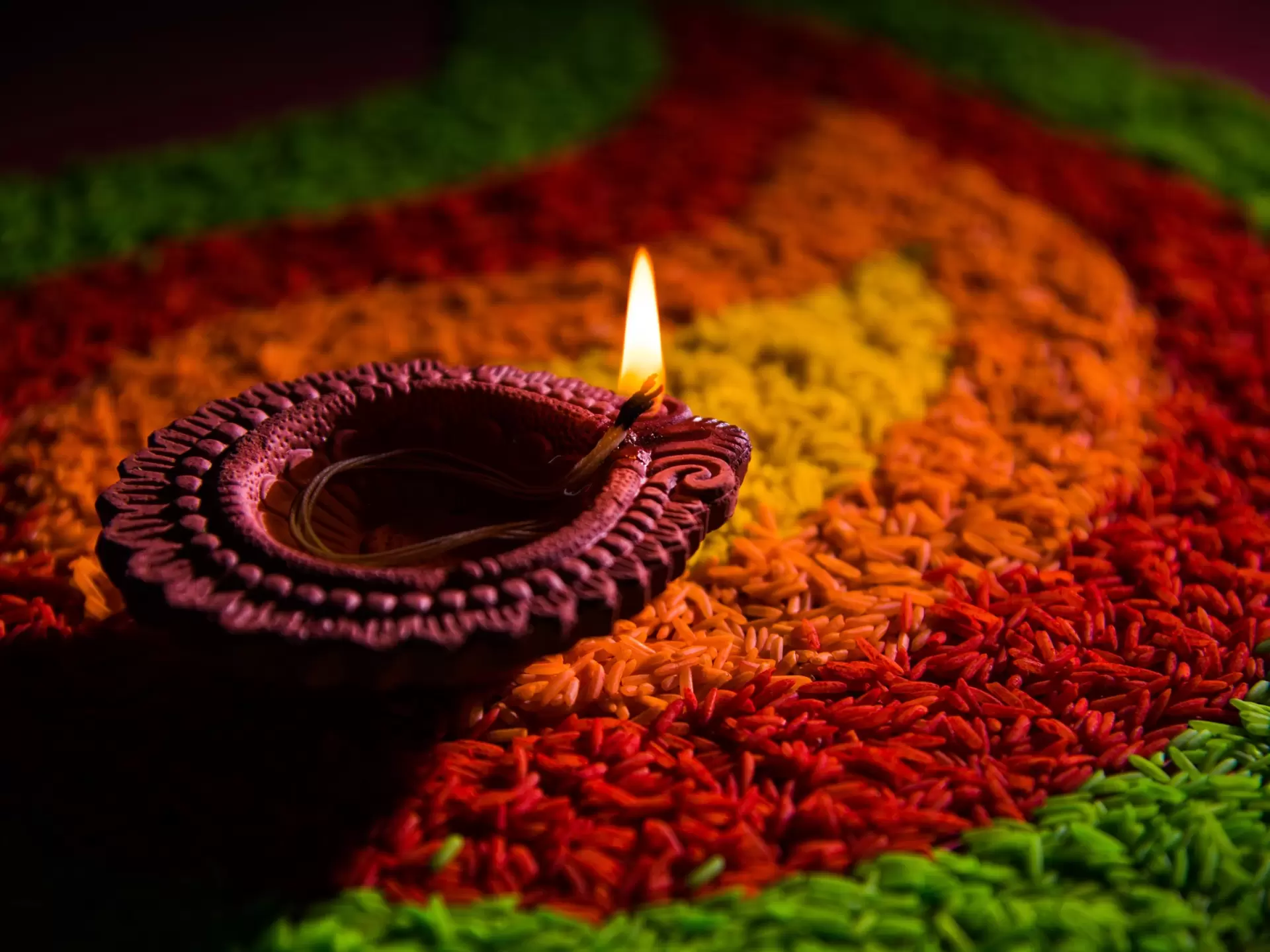
In Northern India, Diwali celebrates the legend of Lord Rama’s return to Ayodhya after 14 years spent in exile. Marking Lord Rama’s return alongside his consort, Sita, and brother, Lakshmana, the people of Ayodhya lit the city with diyas (small, clay oil lamps) to celebrate. The return of Lord Rama symbolizes the victory of light over darkness, and good over evil.
Modern Northern Indian celebrations see homes and other buildings adorned in candles, string lights, and diyas. Locals also decorate floors with rangolis, ornate displays of folk art usually made with colorful rice powder, sand, flowers, diyas, or other powders. These are believed to bring good luck, welcoming the goddess of wealth and prosperity, Lakshmi.
In Western India, Lakshmi is welcomed into the home with small footprint designs that accompany rangoli. The days leading up to Diwali see markets crowded with shoppers buying lamps, firecrackers, diyas, sweets, and more. In the state of Gujarat, Diwali is regarded as a lucky day for purchasing homes, starting businesses, and celebrating life events like weddings.
In Southern India, Diwali is a celebration of Lord Krishna’s defeat over the demon Narakasura. On the primary day of festivities, people often start the day with an oil bath before dawn. Sweets are commonly consumed after, along with wearing festive, often new clothing. People clean their homes and decorate them with kolams, another type of floor folk-art similar to rangolis.
In Eastern India, key components of celebration also include elements like lit candles and diyas, and the exchanging and eating of sweets. Rangoli artwork also welcomes in the goddess Lakshmi, and doors are left unlocked to allow her entrance into one’s home. It is believed that Lakshmi will not enter a dark house, so a high amount of importance is placed on keeping homes lit.
Diwali Celebrations Beyond Hinduism
Beyond Hinduism, other faiths celebrate Diwali with their own traditions and associations.
For Sikhs, Bandi Chhor Divas overlaps with Diwali and has been observed since the 18th century. The day is a celebration of the liberation of Guru Hargobind, an important figure in Sikh faith, after 12 years of imprisonment by the Mughal emperor, Jahangir. In celebration of Guru Hargobind’s freedom, lamps are lit.
In Jainism, Diwali commemorates Mahavira’s liberation from the cycle of life and death (known as samsara) by achieving enlightenment, or moksha. Lamps are also lit in this celebration, symbolizing the light of the holy knowledge achieved by Mahavira.
Some Buddhists acknowledge Diwali as the day Emperor Ashoka converted to Buddhism in the third century BCE. First ruling ruthlessly, Emperor Ashoka became Buddhist after seeing how devastating the effects of war are. To symbolize enlightenment and compassion, lamps are lit on this day by Buddhists who celebrate.
Diwali Activities for Seniors
In the United States, Diwali is still celebrated by much of the Indian diaspora with favorite traditions.
For Hindu seniors celebrating Diwali, they may enjoy:
- Spending time with family, friends, and loved ones
- Exchanging sweets or other gifts
- Decorating with diyas, string lights, or rangoli
- Watching firework displays or lighting sparklers
- Participating in a themed craft, like making these 3D paper diyas
For seniors who don’t celebrate Diwali, there are still some ways to be a kind neighbor. Some include:
- Wishing those celebrating a “happy Diwali”
- Gifting sweets to somebody celebrating
- Acknowledging your neighbors may be busy with plans to celebrate during Diwali, and accommodate their schedules
- Asking neighbors who celebrate about their religion and traditions, if they’d like to share
Celebrate Every Day at StoryPoint Group
At StoryPoint Group, we celebrate the people who make our communities special every day. From holiday traditions to everyday activities and community events, life at StoryPoint Group is filled with ways to connect, engage, and shine every day.
Whether you’re looking for active adult living, independent living, enhanced living, assisted living, or memory care, you’ll find welcoming communities where every day brings something to celebrate.
To learn more about what makes life at StoryPoint Group so special, schedule a tour at a community near you, or call us at 1-844-275-9990.